What Is an Abrasion Testing Machine and How Does It Measure Material Durability?
Learn how controlled rubbing, pressure and cycle measurement reveal a material’s resistance to wear, surface damage and repeated use.
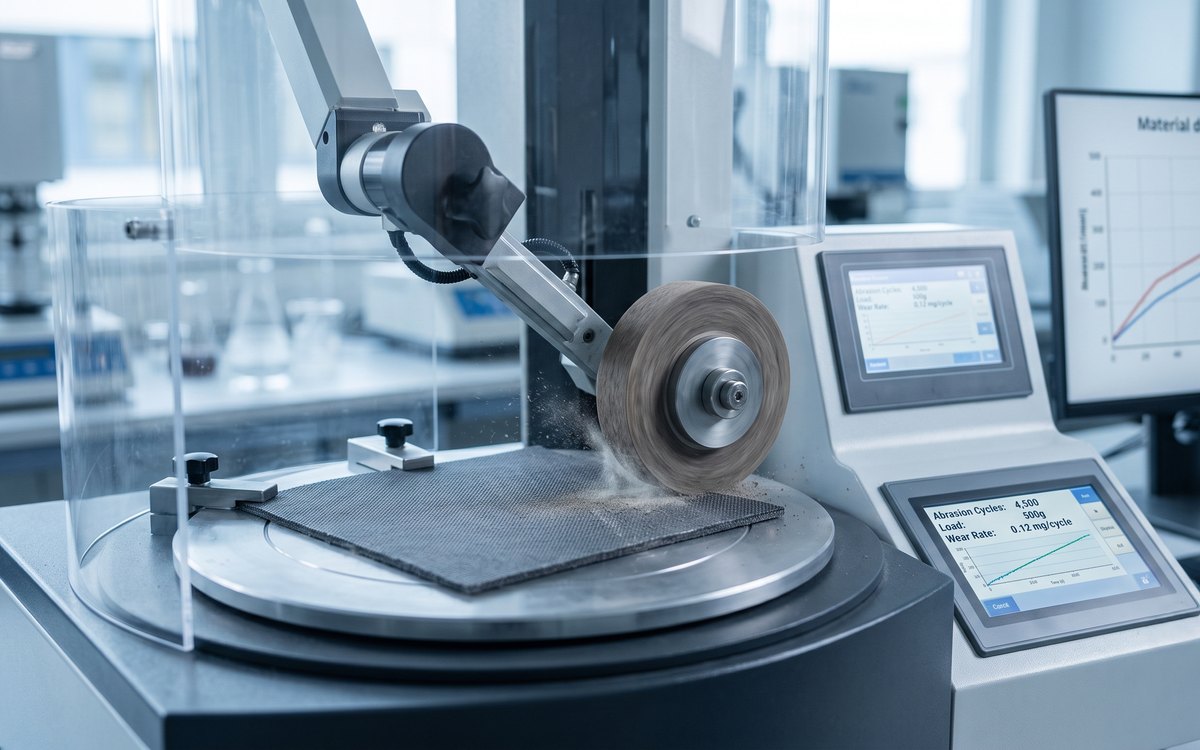
An abrasion testing machine is laboratory equipment that repeatedly rubs a material against a specified abrasive surface under controlled conditions. It measures how well textiles, upholstery, leather, coated fabrics and finished surfaces resist wear, fibre damage, pilling, scratching or visible appearance change.
The machine does not directly calculate how many years a product will last. Instead, it produces repeatable laboratory data that manufacturers can use to compare materials, verify specifications and identify premature surface failure.
Apple Electroniks offers Martindale, Wyzenbeek, pilling and scratch-testing equipment for different materials and test methods. Its MAP04 Martindale model, for example, has 4 independently controlled stations and supports test pressures of 9 kPa and 12 kPa.
What Does This Guide Cover?
This guide explains what an abrasion testing machine does, how a controlled abrasion test is performed, which durability measurements can be reported and how Martindale and Wyzenbeek methods differ. It also covers machine selection, common testing errors and the information laboratories should provide when requesting equipment from Apple Electroniks.
Table of Contents
- What is an abrasion testing machine?
- How does an abrasion testing machine work?
- How is material durability measured?
- What is the difference between Martindale and Wyzenbeek testing?
- Can abrasion results predict real-world product life?
- How do you choose the right abrasion testing machine?
- Which errors can make abrasion results unreliable?
- What related Apple Electroniks resources should you explore?
- What do buyers ask about abrasion testing machines?
What Is an Abrasion Testing Machine?
An abrasion testing machine is an instrument that applies repeated mechanical rubbing between a test specimen and a controlled abradant. By standardizing pressure, motion, speed and cycle count, it allows laboratories to determine when the material breaks down, loses mass, changes appearance or develops surface defects such as fuzzing and pilling.
Abrasion resistance is the ability of a material to resist surface wear caused by rubbing or repeated mechanical contact. It is relevant to apparel, furniture upholstery, automotive interiors, footwear, protective materials, flooring and coated technical textiles.
A typical tester contains:
- Specimen holders or clamps
- A specified abradant or friction medium
- Loading weights or pressure controls
- A motorized rubbing mechanism
- A cycle counter and automatic stop
- Inspection intervals or programmable pauses
- Interchangeable fixtures for different methods
The test configuration depends on the standard. ISO 12947-1, for example, defines Martindale apparatus requirements for woven and knitted fabrics, nonwovens and pile textiles with pile heights of up to 2 mm. The separate ISO 12947-2 procedure determines specimen breakdown through inspection at fixed intervals.
Apple Electroniks lists four principal equipment categories on its abrasion testing equipment page: the MAP04 Martindale Abrasion and Pilling Tester, ICI Pilling Tester, FRT Martindale Scratch Tester and WAT Wyzenbeek Abrasion Tester. Each reproduces a different wear mechanism, so buyers should select the method before selecting the machine.
How Does an Abrasion Testing Machine Work?
An abrasion testing machine works by mounting a prepared specimen, applying a prescribed load and moving the specimen or abradant through a repeatable rubbing path. The machine counts each movement until a specified endpoint or inspection interval is reached. The operator then evaluates breakdown, mass loss or surface appearance according to the applicable standard.
A typical abrasion test follows these steps:
- Select the test method. Identify the required standard, material and reportable endpoint.
- Condition the specimens. Prepare and condition the material according to the specified atmosphere, dimensions and sampling procedure.
- Install the abradant. Fit the required wool fabric, cotton duck, wire mesh, scouring pad or other specified friction medium.
- Mount the specimens. Secure each sample without wrinkles, distortion or unintended tension.
- Set the test conditions. Enter the pressure, load, speed, stroke, cycle count and inspection intervals.
- Run and inspect the test. Stop at the required intervals and record breakdown, mass loss or appearance change.
The Apple Electroniks MAP04 Martindale tester uses a multidirectional rubbing movement and accepts 38 mm specimens. Its four stations can be operated independently, while its counter records up to 999,999 cycles and stops automatically at the programmed point.
For standard Martindale configurations, Apple Electroniks supplies separate weights for 595 ± 7 g, corresponding to 9 kPa, and 795 ± 7 g, corresponding to 12 kPa. These numerical conditions matter because changing the load, abradant or inspection interval changes the severity of the test and prevents direct comparison with results obtained under another configuration.
How Is Material Durability Measured?
Material durability is measured by recording a defined change after controlled abrasion not simply by reading the final cycle number. Depending on the test method, the result can be cycles to specimen breakdown, mass lost after a specified number of rubs, a graded appearance change, scratch damage or the degree of surface pilling.
| Measurement | What the laboratory records | Suitable interpretation |
|---|---|---|
| Cycles to breakdown | Number of rubs before a defined failure occurs | Comparative resistance to physical wear |
| Mass loss | Difference in specimen mass before and after abrasion | Amount of material removed |
| Appearance change | Visible colour, texture, gloss or surface change | Retention of appearance during rubbing |
| Pilling grade | Degree of fuzzing, pills or matting | Fabric surface-quality performance |
| Scratch damage | Marks, coating removal or visible grooves | Resistance of a finished surface |
| Pass/fail result | Whether a specified limit is met | Conformity with a buyer or product specification |
The ISO 12947 series separates these endpoints clearly. ISO 12947-2:2016 covers specimen breakdown, ISO 12947-3:1998 covers mass loss and ISO 12947-4:1998 covers appearance change. All three were reviewed and confirmed as current by ISO in 2023.
Pilling is related to surface wear but is not identical to abrasion breakdown. ISO 12945-2:2020 covers pilling, fuzzing and matting using the modified Martindale method. Visual assessment may use a 5-to-1 grading scale, where grade 5 indicates no visible pilling and grade 1 indicates very severe pilling.
The endpoint must therefore appear in every report. A statement such as “passed 30,000 rubs” is incomplete unless it also identifies the standard, load, abradant, inspection rule and failure criterion.
What Is the Difference Between Martindale and Wyzenbeek Testing?
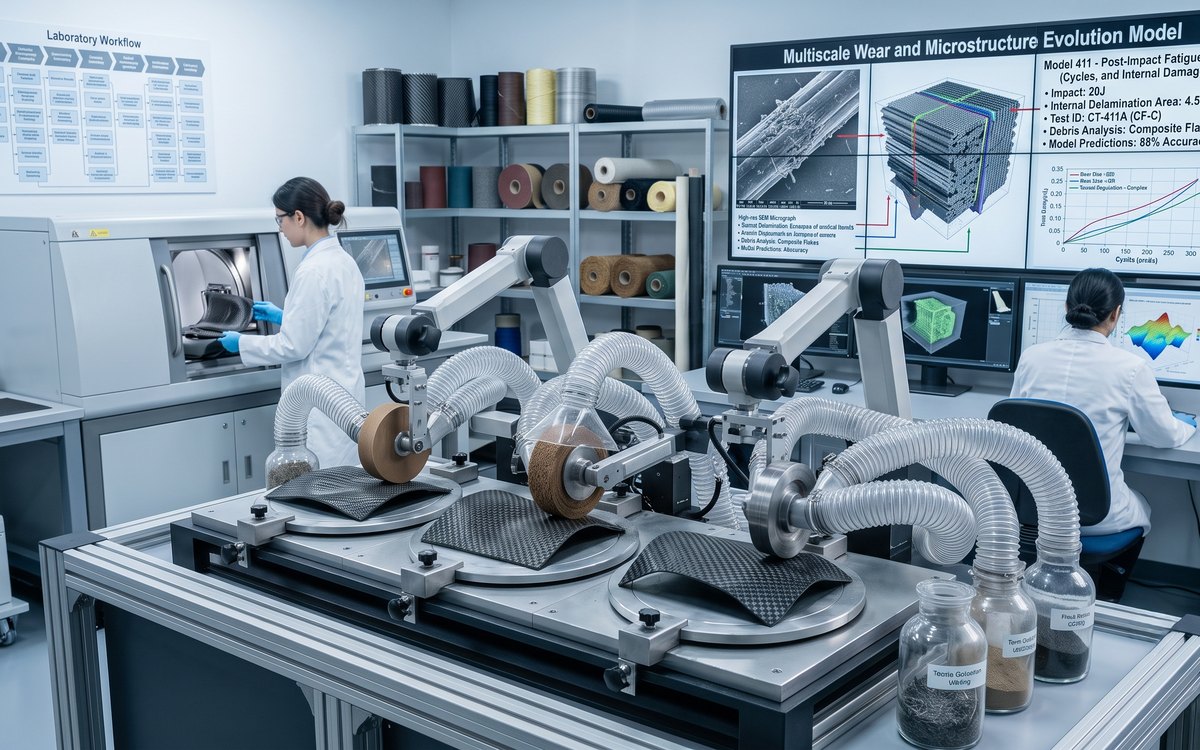
Martindale testing uses a multidirectional rubbing pattern across a flat specimen, while Wyzenbeek testing applies back-and-forth abrasion over a curved surface. Both measure wear resistance, but their movements, specimen mounting, abradants and result definitions differ. A Martindale cycle count must not be treated as equivalent to a Wyzenbeek double-rub result.
| Factor | Martindale method | Wyzenbeek method |
|---|---|---|
| Primary motion | Multidirectional Lissajous movement | Reciprocating back-and-forth movement |
| Specimen position | Generally flat | Held over a curved surface |
| Common standard | ASTM D4966 or ISO 12947 | ASTM D4157 |
| Typical applications | Apparel, upholstery, nonwovens and technical textiles | Upholstery, woven fabrics, automotive and PVC fabrics |
| Possible endpoints | Breakdown, mass loss or appearance change | Yarn breakage, coating wear or specified visual failure |
| Apple Electroniks model | MAP04 Martindale Tester | WAT Wyzenbeek Tester |
ASTM D4966-22 specifies the Martindale abrasion tester method for textile fabrics. ASTM D4157-13(2022) covers textile abrasion using the oscillatory cylinder method associated with Wyzenbeek equipment.
The Apple Electroniks WAT Wyzenbeek Tester has 4 testing stations, an adjustable oscillatory frequency up to 90 cycles per minute and a 76 mm oscillatory arc. It accepts specimens measuring 245 × 73 mm, with adjustable tension from 1–6 lbf and loading from 1–3.5 lbf.
The MAP04 Martindale model also has four stations, but it uses a different motion, specimen size and loading system. Results from the two machines are method-specific; a higher numerical result from one test does not automatically indicate better performance than a lower result from the other.
Can Abrasion Results Predict Real-World Product Life?
Abrasion results can compare materials and reveal likely wear weaknesses, but they cannot provide a universal conversion from laboratory cycles to months or years of service. Real-world durability also depends on user behaviour, contamination, cleaning, moisture, temperature, product construction and the type and direction of contact experienced during use.
An abrasion test isolates selected variables so that specimens can be compared under the same conditions. This makes the result valuable for:
- Comparing candidate materials
- Approving suppliers or production batches
- Investigating customer complaints
- Monitoring changes in coatings or finishes
- Establishing internal quality limits
- Checking compliance with buyer specifications
The method should reproduce the most relevant failure mechanism. A flat apparel fabric may be suited to Martindale testing, while an upholstery specification may require Wyzenbeek. Coated materials may require another procedure: ISO 5470-2:2021 specifically addresses wet and dry Martindale abrasion of rubber- or plastics-coated fabrics and was confirmed as current by ISO in 2026.
Testing multiple replicates is also important because textile construction is not perfectly uniform. Specimens should be taken from defined locations and, where required, in different orientations. The report should state every individual result as well as the calculated summary required by the standard.
The safest interpretation is comparative: under one documented method, material A resisted the specified abrasion endpoint longer than material B. Claims about expected product lifespan require supporting field data or a validated relationship between laboratory results and the product’s actual service conditions.
How Do You Choose the Right Abrasion Testing Machine?
Choose an abrasion testing machine by matching the product material, intended market, applicable test standard and required endpoint. Then verify the instrument’s motion, load range, specimen holders, abradants, cycle capacity and inspection controls. Machine selection should begin with the written test requirement rather than a preferred tester name.
Use this procurement checklist:
- Identify the material: woven fabric, knit, nonwoven, upholstery, leather, coated fabric, flooring or another finished surface.
- Confirm the standard: record the full standard number and edition.
- Define the endpoint: breakdown, mass loss, appearance change, pilling or scratch resistance.
- Verify the rubbing motion: multidirectional, oscillatory-cylinder, reciprocating or tumbling.
- Check pressure and load: make sure the full required range is available.
- Confirm sample capacity: compare specimen dimensions and the number of test stations.
- Review consumables: identify the required abradant, felt, foam, wire mesh or reference photographs.
- Assess documentation: request operating instructions, calibration support and a complete scope of supply.
The MAP04 Martindale instrument supports 9 kPa and 12 kPa configurations and four independently controlled stations. The WAT Wyzenbeek tester provides four stations, adjustable specimen tension up to 6 lbf and sample loading up to 3.5 lbf.
For flooring and finished plastic surfaces, the Apple Electroniks FRT Martindale Scratch Tester provides two test stations, a 60 ± 3 mm reciprocating stroke and adjustable operation from 10–60 strokes per minute. These specifications illustrate why the target material and test procedure must be supplied before equipment is selected.
Which Errors Can Make Abrasion Results Unreliable?
Abrasion results become unreliable when specimens are conditioned, mounted, loaded or inspected inconsistently. Worn abradants, incorrect pressure, uneven tension and missed inspection points can change the severity of the test. Reliable comparison requires the same standard edition, consumables, preparation procedure and failure definition for every specimen and laboratory.
Common errors include:
- Cutting specimens from non-representative or adjacent areas
- Ignoring machine-direction and cross-direction requirements
- Mounting samples with wrinkles or unequal tension
- Reusing abradants beyond their permitted service interval
- Applying the wrong pressure or loading weight
- Failing to remove abrasion debris when the method requires it
- Inspecting specimens under inconsistent lighting
- Continuing past the actual breakdown point
- Reporting cycles without the test standard and endpoint
Automatic counters reduce cycle-counting errors but do not replace operator control. The MAP04 counter ranges from 0 to 999,999 cycles, while the FRT scratch tester’s counter ranges from 0 to 9,999,999 and stops automatically at the programmed value.
Visual grading also requires controlled assessment. The Apple Electroniks ICI Pilling Tester operates at 60 ± 2 rpm and supports ISO 12945-1. The current ISO 12945-1:2020 specifically identifies the pilling-box method, while ISO 12945-4:2020 addresses visual analysis of pilling, fuzzing and matting.
A complete test report should identify the specimen, standard edition, conditioning atmosphere, machine, abradant, load, cycle intervals, endpoint and any deviation from the prescribed method.
Related Apple Electroniks Resources
What Do Buyers Ask About Abrasion Testing Machines?
Buyers commonly ask how abrasion resistance is calculated, which machine suits their material and whether Martindale results can be compared with Wyzenbeek results. The answers depend on the test standard and endpoint.
What does an abrasion testing machine measure?
An abrasion testing machine measures resistance to controlled rubbing. Depending on the method, it reports cycles to breakdown, mass loss, appearance change, pilling grade or another defined endpoint.
How is abrasion resistance calculated?
Abrasion resistance may be expressed as the number of cycles before failure, measured mass loss after a set number of cycles or an appearance grade. The exact calculation must follow the selected standard.
What materials can be tested?
Depending on the machine and fixtures, abrasion testing can be performed on woven and knitted fabrics, nonwovens, upholstery, leather, coated textiles, PVC materials, flooring and finished surfaces.
Is pilling the same as abrasion?
No. Abrasion measures material loss or breakdown from rubbing, while pilling measures the formation of fuzz, fibre balls or matting on a fabric surface.
What is the difference between a rub and a cycle?
The definition depends on the method. Some standards count individual movements, while others report complete cycles or double rubs; the test report should use the terminology defined by the applicable standard.
Can Martindale and Wyzenbeek results be compared directly?
No. The two methods use different motions, specimen mounting systems, abradants and failure criteria. Results should only be compared when produced using the same method and conditions.
Does a higher cycle count always mean better quality?
A higher result indicates greater resistance under the stated test conditions, but overall product quality also depends on strength, colourfastness, pilling, comfort, construction and the intended use.
What details are needed before requesting a quotation?
Provide the material, product application, standard and edition, required endpoint, specimen dimensions, expected testing volume and required accessories. Apple Electroniks can then identify an appropriate machine configuration.
Explore the relevant Apple Electroniks testing equipment, or contact us with your required standard and specimen details.