


 Opening Hours : Mon to Sat : 10 AM to 6 PM
 Call us :
07313726805
Call us :
07313726805

 Send Inquiry
Wet Sieving Thickness Tester
Price 1700000 INR/ Unit
Wet Sieving Thickness Tester Specification
- Test Material
- Paper, Board, Filter Media
- Temperature
- 10C - 40C
- Number of Specimens
- 1 at a time
- Humidity
- 10-90% RH (non-condensing)
- Specimen Size
- 100 mm diameter
- Port Size
- Standard water inlet: 12 inch
- Test Range
- 0 - 5 mm
- Type
- Wet Sieving Thickness Tester
- Material
- SS
- Power
- 220V AC, 50Hz
- Power Source
- Electric
- Dimension (L*W*H)
- 730 x 320 x 350mm (L x W x H) Millimeter (mm)
- Weight
- 40 Kg Kilograms (kg)
- Usage
- Industrial Use
- Application
- Paper, Board, Pulp Industry, Laboratory use
- Accessories Included
- Water collection tray, Calibration block, User manual
- Display Type
- Analog Dial Gauge or Digital (optional)
- Thickness Reading Resolution
- 0.01 mm
- Operation Mode
- Manual/Motorized (as per model)
- Finish
- Powder coated/Polished
- Compliance Standards
- Conforms to TAPPI and ISO test standards
- Sieve Tray Material
- Stainless Steel 304 grade
- Water Inlet Connection
- Stainless Steel; corrosion-resistant material
- Protection Level
- Splash Resistant Enclosure
Wet Sieving Thickness Tester Trade Information
- Minimum Order Quantity
- 1 Unit
- Supply Ability
- 10 Units Per Week
- Delivery Time
- Week
- Main Domestic Market
- Andhra Pradesh, Haryana, Manipur, Delhi, Rajasthan, West Bengal, Central India, Arunachal Pradesh, Meghalaya, Karnataka, South India, Odisha, Bihar, Daman and Diu, Madhya Pradesh, Tripura, , Chandigarh, Jammu and Kashmir, North India, Nagaland, Punjab, Sikkim, Chhattisgarh, Maharashtra, East India, Assam, Goa, West India, Tamil Nadu, Uttar Pradesh, Andaman and Nicobar Islands, Himachal Pradesh, Gujarat, Kerala, Telangana, Pondicherry, Mizoram, Lakshadweep, Dadra and Nagar Haveli, Uttarakhand, Jharkhand, All India
About Wet Sieving Thickness Tester
Wet Sieving Thickness Tester is suitable to find the thickness of geotextile synthetic materials and related products under pressure and in specified time. The offered tester is highly demanded in the market due to its longer service life and durability. This tester is inspected from our end before delivered to customers. Further, we provide this Wet Sieving Thickness Tester in several of technical specifications as per the specification laid down by our patrons.
Application:
Geotextile Thickness Tester, to determine the thickness of geotextile synthetic materials and related products under pressure and in specified time.
Specifications:
- Area of presser foot: 25 sq. cm
- Weight of presser foot: 5N (Self-weight: 510.2g, 4 pieces)
- Sample pressure: 2±0.01kpa / 20±0.1kPa / 200±0.1kPa
- Dial indicator: 024±0.01mm
- Micrometer gauge: 01±0.001mm
- Stopwatch: resolution 0.1s
- Weight 40 Kg
- Dimensions 730 x 320 x 350mm (L x W x H)
- ISO 9863 JTG E50
- GB/T 13761
Wet Sieving Thickness Tester Manufacturer
Wet Sieving Thickness Tester Supplier
Wet Sieving Thickness Tester Exporter
Key Performance and Design Features
Engineered for industrial and laboratory environments, this Wet Sieving Thickness Tester combines sturdy stainless steel construction with a splash-resistant enclosure. It is equipped with either an analog dial or a digital gauge, both offering exceptionally fine resolution (0.01 mm) for accurate thickness measurement of wet specimens. The instrument is provided with essential accessories such as a calibration block, water collection tray, and comprehensive user manual for streamlined setup and operation.
Flexible Applications Across Industries
Ideal for the paper, board, pulp, and filter media sectors, this tester supports a wide range of test materials. Its capability to measure up to 5 mm thickness and handle a specimen diameter of 100 mm makes it versatile for routine quality control and research. The adjustable operation modes (manual/motorized) allow accommodation of various testing preferences, supporting both routine laboratory tasks and more specialized industrial requirements.
FAQ's of Wet Sieving Thickness Tester:
Q: How does the Wet Sieving Thickness Tester measure thickness?
A: The tester measures the thickness of wet specimens using either an analog dial gauge or a digital display, both of which provide high-resolution readings down to 0.01 mm. The specimen is placed on the sieve tray, and the measurement is taken while water is gently applied, simulating actual processing conditions.Q: What specimens can be tested with this instrument?
A: This instrument is designed to measure the thickness of paper, board, pulp, and filter media specimens. The specimen should have a diameter of up to 100 mm, making it suitable for a variety of laboratory and industrial materials in the paper and related industries.Q: When should I use the manual versus motorized operation mode?
A: The manual mode is suitable for individual or low-frequency thickness measurements, offering precise control for single specimens. The motorized option, available in certain models, is recommended for higher throughput laboratories or where repeatability and efficiency are prioritized.Q: Where can this tester be installed for optimal use?
A: This device is best installed in laboratory environments or dedicated industrial testing areas. It requires a stable surface and access to a standard 220V AC, 50Hz power supply, as well as a water inlet connection. Its compact footprint (730 x 320 x 350 mm) allows easy integration into most laboratory setups.Q: What is the process for calibrating the tester?
A: Calibration is performed using the supplied calibration block. Follow the user manual to place the calibration block on the sieve tray, then adjust the device as instructed until the display matches the calibration standard. This ensures precise and reliable readings for every test.Q: How does this tester benefit routine laboratory work?
A: By providing accurate, repeatable, and user-friendly thickness measurement of wet specimens, the instrument streamlines quality control, reduces the risk of errors, and ensures compliance with industry standards (TAPPI and ISO). Its robust, corrosion-resistant construction further guarantees reliability in demanding laboratory environments.Q: What accessories are included with the tester?
A: Standard accessories include a water collection tray to manage effluent during testing, a calibration block for accuracy verification, and a detailed user manual to assist with setup, operation, and maintenance of the instrument.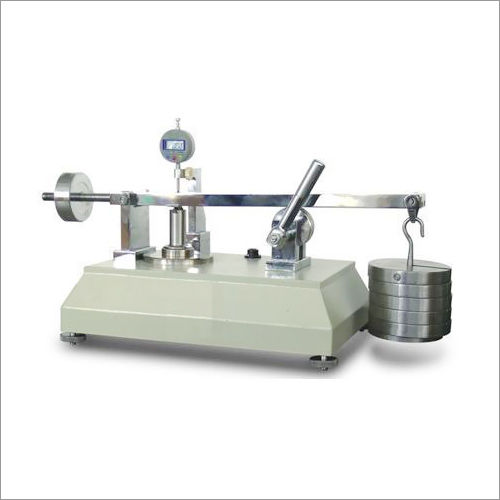

Price:
- 50
- 100
- 200
- 250
- 500
- 1000+

More Products in Geo Textile Non Woven Testing Equipment Category
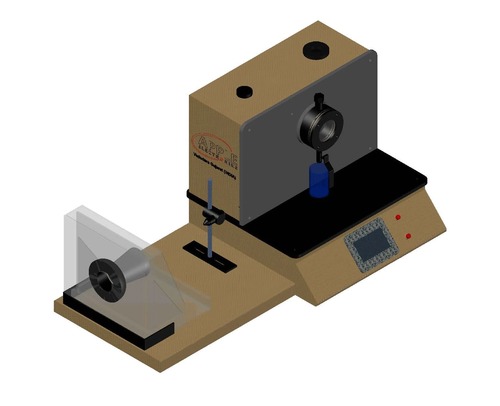
Synthetic Blood Penetration Tester
Minimum Order Quantity : 1 Piece
Type : Other, Automatic, Digital Display
Usage : Testing penetration resistance of protective apparel and medical masks against synthetic blood
Weight : 32 kg
Dimension (L*W*H) : 600 mm x 400 mm x 500 mm
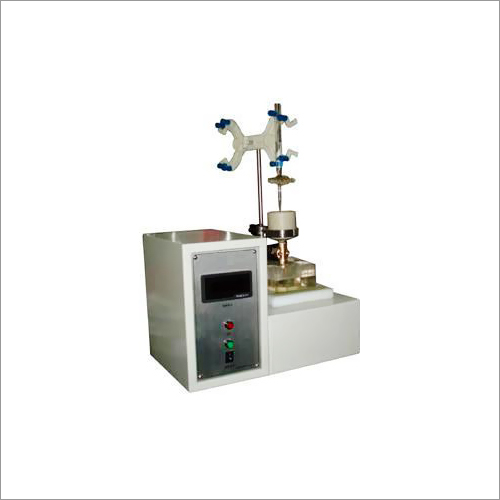
Liquid Strike Through Time & Wetback Tester
Price 6.95 INR / Unit
Minimum Order Quantity : 1 Unit
Type : Other, Digital tester
Usage : Industrial Use
Weight : 45 Kg Kilograms (kg)
Dimension (L*W*H) : 500 x 350 x 800 mm(LxWxH) Millimeter (mm)
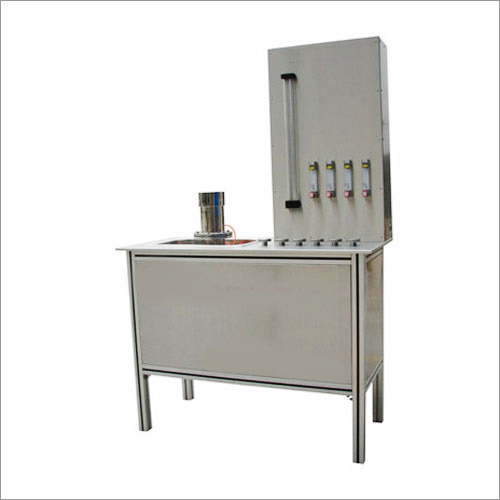
Water Permeability Tester
Price 1800000 INR / Unit
Minimum Order Quantity : 1 Unit
Type : Other, Floor Mounted, Manual
Usage : Industrial Use
Weight : 85 Kg Kilograms (kg)
Dimension (L*W*H) : 1200 x 540 x 1850mm (L x W x H) Millimeter (mm)
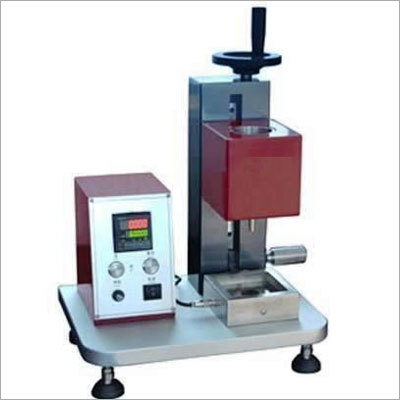
Liquid Strike Through Time Tester
Price 8.94000 INR / Unit
Minimum Order Quantity : 1 Unit
Type : Other, BenchTop Laboratory Equipment
Usage : Industrial Use
Weight : Approx. 12 kg
Dimension (L*W*H) : 420 mm x 320 mm x 320 mm


- B, 314-315, Hub Town, Makarpura Bus Depot, Vadodara - 390010, Gujarat, India
- Phone : 07313726805

- Mr Vinodkumar Gaikwad (CEO)
- Mobile : 07313726805
- Send Inquiry
- A-40, Unnadeep Complex, Tower-A, Susen Tarsali Ring Road, Tarsali, Vadodara - 390010, Gujarat, India
Mr. Vinodkumar (CEO)
Mobile :+919998755997, +919558979952
 Send Inquiry
- Fiber Testing Machine
- Fabric Recovery Testing Machine
- Strength and Fatige Testing Machine
- Color Fastness Testing Machine
- Abrasion and Pilling Testing Machine
- Flammability Testing Machine
- Universal Testing Machine
- Shrinkage Testing Machine
- Sampling Machine
- Dyeing and Finishing Machine
- Geo Textile Non Woven Testing Equipment
- Color Machining Testing Equipment
- Cotton Ginning Machine
- Yarn Testing Machine
- Oil Extraction Apparatus
- Laboratory Air Compressor
- WIRE TESTING MACHINE
- Textile Testing Equipment
- Flammability Tester
- Pull Testers
- Fibers Testing Equipment & Machine
- Texture Analyzer


Developed and Managed by Infocom Network Private Limited.

