


 Opening Hours : Mon to Sat : 10 AM to 6 PM
 Call us :
07313726805
Call us :
07313726805

 Send Inquiry
Stiffness Pneumatic Tester
Price 200000.00 INR/ Unit
Stiffness Pneumatic Tester Specification
- Test Range
- 10 mN - 1000 mN
- Port Size
- 8 mm OD
- Humidity
- Ambient (Optional Control Attachment)
- Test Material
- Paper, Cardboard, Sheet Materials
- Specimen Size
- 38 x 70 mm
- Temperature
- Ambient (Optional Control Attachment)
- Number of Specimens
- Single Specimen at a Time
- Gas Pressure
- 0.4~0.7 MPa
- Type
- Stiffness Tester - Pneumatic Operated
- Material
- SS
- Power
- 220V AC, 50 Hz
- Power Source
- Electric and Pneumatic
- Dimension (L*W*H)
- 500x500x600 mm(LxWxH) Millimeter (mm)
- Weight
- 18 Kg Kilograms (kg)
- Usage
- Industrial Use
- Application
- Paper, Board, Cardboard Testing
- Test Angle
- 15 or 7.5, Selectable
- Operation Mode
- Microprocessor-Based Control
- Display Type
- Digital (LED/LCD Display)
- Repeatability
- 1% of reading
- Accessories Supplied
- Calibration Weight, Operating Manual
- Fixture Clamping
- Pneumatic (Foot Switch Operated)
- Data Output
- RS232/USB (Optional)
- Resolution
- 0.1 mN
Stiffness Pneumatic Tester Trade Information
- Minimum Order Quantity
- 1 Unit
- Supply Ability
- 10 Units Per Week
- Delivery Time
- Week
- Main Domestic Market
- Manipur, Jharkhand, Chhattisgarh, Delhi, Meghalaya, Odisha, North India, Kerala, Tamil Nadu, Jammu and Kashmir, Madhya Pradesh, Chandigarh, Himachal Pradesh, Maharashtra, Andhra Pradesh, Dadra and Nagar Haveli, Andaman and Nicobar Islands, Telangana, East India, Assam, West India, Sikkim, Lakshadweep, Tripura, Goa, Daman and Diu, West Bengal, Arunachal Pradesh, Gujarat, , Pondicherry, Nagaland, Punjab, Uttarakhand, Bihar, Uttar Pradesh, Central India, South India, Rajasthan, Mizoram, Karnataka, Haryana, All India
About Stiffness Pneumatic Tester
With the support of our adept and seasoned professionals, we are occupied in providing a commendable range of Stiffness Pneumatic Tester. The offer tester is widely used in textile industry for testing the stiffness of fabrics. In line with customers variegated requirements, we offer the entire range in various specifications. The offered pneumatic tester is extensively used in textile industry for testing the stiffness of fabrics. Patrons can avail the Stiffness Pneumatic Tester from us at market leading prices.
Specifications
- Provided with pneumatic cylinder
- Digital force gauge: 50 kgf, 500N or 100lb (switchable) with peak-hold facility.
- Lab compressed air is required.
- Air Source 0.4-0.7 Mpa
- Weight : 18 Kg
- Dimensions : 500 x 500 x 600 mm(L x W x H)
| Automation Grade | Semi-Automatic |
| Color | Any |
| Accuracy | 0.1 |
| Display | Digital |
| Load | 50Kg |
| Measuring Range | 500N |
| Phase | Single |
| Power Source | Chargeable |
| Type | Manual |
| Country of Origin | Made in India |
Advanced Digital Measurement
The Stiffness Pneumatic Tester integrates a high-precision digital (LED/LCD) display and microprocessor-based control, providing users with clear and reliable test results. Selectable test angles and fine resolution ensure accurate stiffness assessment across different materials such as paper, board, and cardboard.
Efficient Pneumatic Operation
Automated pneumatic clamping, activated by a convenient foot switch, enhances workflow efficiency and consistency. The robust stainless steel construction and ergonomic design make the tester user-friendly and durable, suitable for demanding industrial environments.
Comprehensive Data Management
Equipped with optional RS232 and USB output, the tester streamlines data transfer and analysis. Supplied calibration weight and comprehensive operating manual ensure accessible setup and maintenance. Optional environmental control attachments further expand its usability in controlled settings.
FAQ's of Stiffness Pneumatic Tester:
Q: How does the Stiffness Pneumatic Tester operate?
A: The device uses a microprocessor-based control system for testing, with pneumatic clamping operated by a foot switch. Simply load a single specimen, select the desired angle (15 or 7.5), and initiate the test. The digital display provides immediate and precise stiffness measurements.Q: What types of materials can be tested with this equipment?
A: This tester is specifically designed for paper, board, and cardboard, as well as other sheet materials within the test range of 10 mN to 1000 mN. It supports industrial testing requirements for quality control and research purposes.Q: When should I use the optional environmental control attachments?
A: Optional temperature and humidity control attachments are recommended when testing conditions must be strictly managed, such as in laboratory environments or quality assurance settings where material properties may be affected by ambient changes.Q: Where can the data from the Stiffness Pneumatic Tester be exported?
A: Test results can be exported via RS232 or USB ports (optional), allowing for easy data management and analysis on external computers or lab information systems.Q: What is the process for calibrating the tester?
A: Calibration is supported using the provided calibration weight and guided by the operating manual. The procedure ensures ongoing accuracy and repeatability, maintaining the tester's reliability for industrial use.Q: How is safety or repeatability ensured during testing?
A: The pneumatic clamping system, operated by a foot switch, helps reduce manual intervention, thus increasing safety and ensuring test consistency. The tester also delivers results with 1% repeatability, confirmed through its precise digital measurement system.Q: What are the main benefits of using this tester in an industrial environment?
A: Key advantages include efficient sample handling via pneumatic automation, high precision digital measurement, easy operation, robust stainless steel construction, and versatile data output options. These features optimize productivity and accuracy in quality control processes.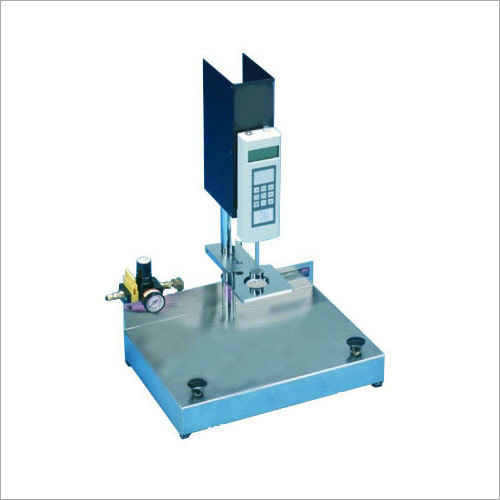

Price:
- 50
- 100
- 200
- 250
- 500
- 1000+

More Products in Fabric Recovery Testing Machine Category
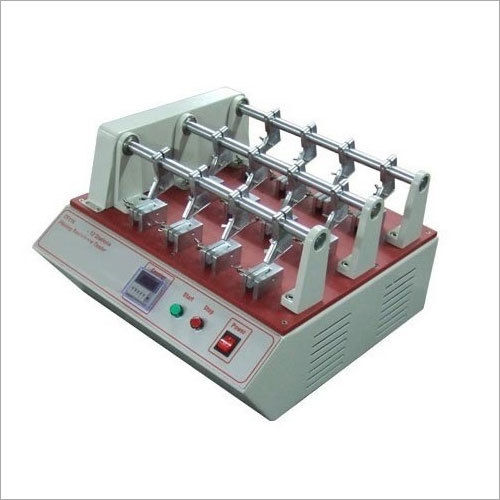
Flexing Resistance Tester
Price 1900000 INR / Unit
Minimum Order Quantity : 1 Unit
Type : Other, Flexing Resistance Tester
Usage : Industrial Use
Weight : 70 Kg Kilograms (kg)
Dimension (L*W*H) : 480 x 480 x 320 mm(LxWxH) Millimeter (mm)
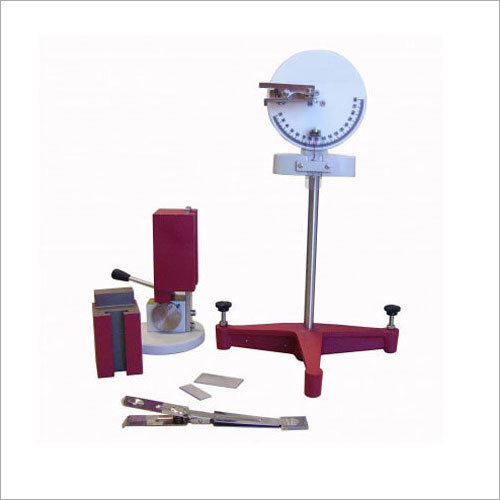
Crease Recovery Tester
Price 1700000 INR / Unit
Minimum Order Quantity : 1 Unit
Type : Other, Testing Instrument
Usage : Industrial Use
Weight : 5 Kg Kilograms (kg)
Dimension (L*W*H) : 170x170x360 mm(LxWxH) Millimeter (mm)
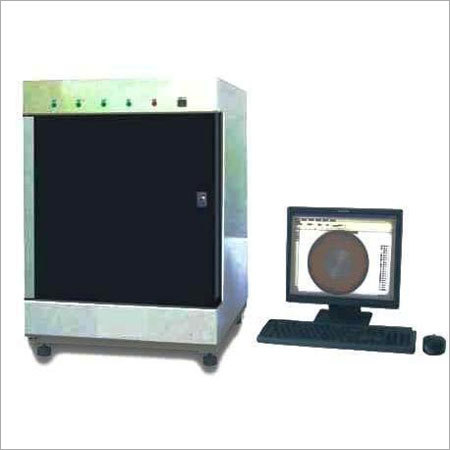
Fabric Drape Tester
Price 1700000 INR / Unit
Minimum Order Quantity : 1 Unit
Type : Other, Laboratory Testing Equipment
Usage : Industrial Use
Weight : 40 Kg Kilograms (kg)
Dimension (L*W*H) : 480 x 540 x 870mm (LxWxH) Millimeter (mm)
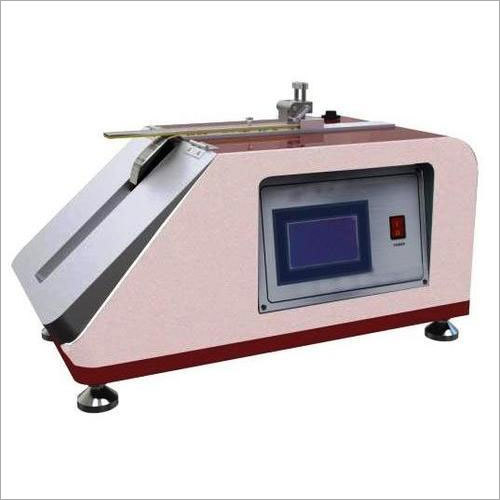
Auto Fabric Stiffness Tester
Minimum Order Quantity : 1 Unit
Type : Other, Automatic Testing Instrument
Usage : Industrial use
Weight : 18 Kg Kilograms (kg)
Dimension (L*W*H) : 450 x 250 x 400 mm(LxWxH) Millimeter (mm)


- B, 314-315, Hub Town, Makarpura Bus Depot, Vadodara - 390010, Gujarat, India
- Phone : 07313726805

- Mr Vinodkumar Gaikwad (CEO)
- Mobile : 07313726805
- Send Inquiry
- A-40, Unnadeep Complex, Tower-A, Susen Tarsali Ring Road, Tarsali, Vadodara - 390010, Gujarat, India
Mr. Vinodkumar (CEO)
Mobile :+919998755997, +919558979952
 Send Inquiry
- Fiber Testing Machine
- Fabric Recovery Testing Machine
- Strength and Fatige Testing Machine
- Color Fastness Testing Machine
- Abrasion and Pilling Testing Machine
- Flammability Testing Machine
- Universal Testing Machine
- Shrinkage Testing Machine
- Sampling Machine
- Dyeing and Finishing Machine
- Geo Textile Non Woven Testing Equipment
- Color Machining Testing Equipment
- Cotton Ginning Machine
- Yarn Testing Machine
- Oil Extraction Apparatus
- Laboratory Air Compressor
- WIRE TESTING MACHINE
- Textile Testing Equipment
- Flammability Tester
- Pull Testers
- Fibers Testing Equipment & Machine
- Texture Analyzer


Developed and Managed by Infocom Network Private Limited.

