


 Opening Hours : Mon to Sat : 10 AM to 6 PM
 Call us :
07313726805
Call us :
07313726805

 Send Inquiry
Vertical Flammability
Price 678028 INR/ Unit
MOQ : 1 Unit
Vertical Flammability Specification
- Test Material
- Polymer, Textile, Insulation, Plastic etc.
- Port Size
- 8 mm
- Gas Pressure
- Regulated via inbuilt gas control valve
- Humidity
- Up to 98% RH (Relative Humidity)
- Specimen Size
- Standard: 125 mm x 13 mm
- Temperature
- Ambient to 50C
- Test Range
- Standard as per IS, ASTM, UL Specs
- Number of Specimens
- 1 at a time (standard), upgradable
- Material
- Mild Steel
- Power
- 230 V AC, 50 Hz
- Power Source
- Electric
- Dimension (L*W*H)
- 52 cm x 30 cm x 70 cm
- Weight
- Approx. 18 kg
- Usage
- Laboratory
- Application
- Laboratory
- Compliance Standards
- IS 15061, ASTM D6413, UL94
- Ignition Time
- 0~99.9 seconds (Digital timer)
- Observation Window
- Heat-resistant glass
- Burner Type
- Bunsen with precise angle adjustment
- After Flame Time
- 0~999 seconds (Digital timer)
- Safety Features
- Emergency stop, flame shield, safety switches
- Accessories Included
- Sample holders, gas tubing, timer, manual
- Control Panel
- Front-mounted, easy access
- Voltage
- 230 V
Vertical Flammability Trade Information
- Minimum Order Quantity
- 1 Unit
- Supply Ability
- 5 Units Per Month
- Delivery Time
- 10 Days
About Vertical Flammability
| Grade | Automatic |
| Material | Mild Steel |
| Type Of Testing Machines | Eddy Current Dynamometer |
| Packaging Type | Box |
| Model Name/Number | VFT |
| Display Type | Digital |
| Usage/Application | Laboratory |
Compliant with International Testing Standards
This vertical flammability tester meets the requirements of IS 15061, ASTM D6413, and UL94, ensuring your testing results are globally recognized and acceptable for regulatory submissions. Rigorously engineered, it provides reliable data for various materials, including polymers and textiles.
Advanced Safety and User Interfaces
The device offers advanced safety features such as an emergency stop, flame shield, and safety switches, coupled with a front-mounted, easy-to-access control panel. The heat-resistant glass observation window allows safe, uninterrupted monitoring throughout the test.
Versatile Laboratory Application
With its robust mild steel construction and compatibility with an array of materials, this flammability tester is designed for consistent performance in laboratory settings. The instrument accommodates one standard specimen at a time, with an upgrade option for increased throughput.
FAQ's of Vertical Flammability:
Q: How does the vertical flammability tester operate?
A: The operator secures a specimen in the sample holder, sets ignition and after-flame timing via the digital panel, and adjusts the Bunsen burner. Testing proceeds under observation through the heat-resistant window, following the selected international test standard.Q: What materials can be tested with this equipment?
A: This instrument is suitable for evaluating the flammability of polymers, textiles, insulation, plastic, and similar materials, supporting compliance checks for IS, ASTM, and UL standards.Q: When is the best time to use this tester?
A: This tester is ideal for pre-compliance assessments, quality control, research, or certification processes in both academic and industrial laboratories handling materials that must meet flame resistance standards.Q: Where should the flammability tester be installed?
A: The unit is designed for indoor laboratory environments on level benches, with access to 230 V AC electrical supply and appropriate ventilation for safe testing.Q: What is the testing process for a standard specimen?
A: Place the standard-sized specimen (125 mm x 13 mm) into the holder, set the appropriate timer values, adjust burner angle, and commence the test while monitoring through the safety glass. The process is as per the selected national or international standard.Q: What benefits does this instrument offer laboratories?
A: By delivering precise, standard-compliant data, the tester enhances research quality, supports certification and regulatory compliance, and improves laboratory safety through built-in system protections.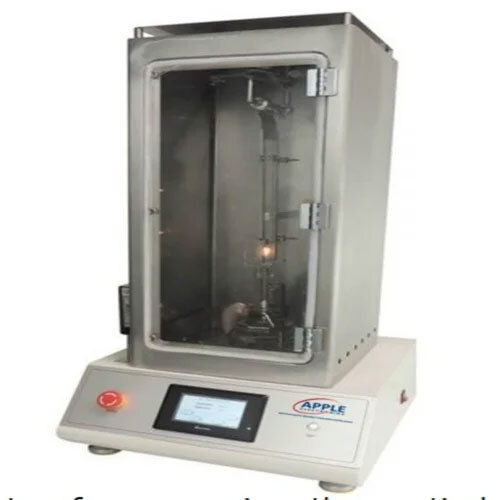
Tell us about your requirement

Price:
Quantity
Select Unit
- 50
- 100
- 200
- 250
- 500
- 1000+
Additional detail
Mobile number
Email

More Products in Flammability Tester Category
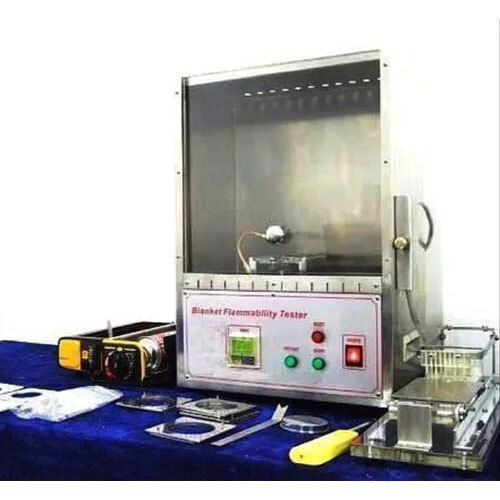
Blanket Flammability Testing Machine
Price 850000 INR / Unit
Minimum Order Quantity : 1 Unit
Usage : Laboratory
Application : Laboratory
Material : Stainless Steel
Power Source : Electric
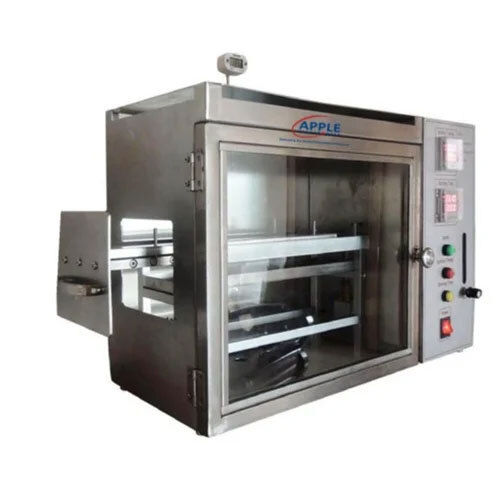
Horizontal Flammability Tester
Price 568000 INR / Unit
Minimum Order Quantity : 1 Unit
Usage : Industrial
Application : Industrial
Material : Mild Steel
Power Source : Electric
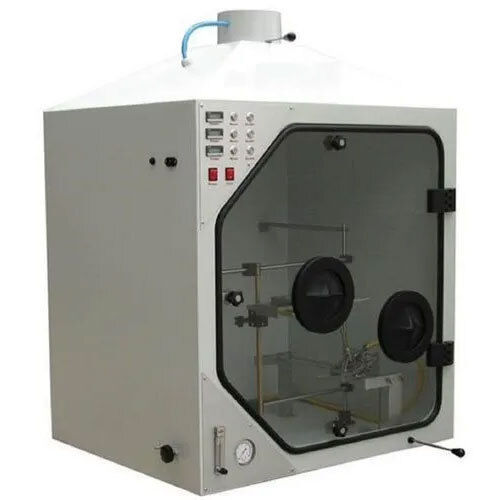
UL94 Horizontal Vertical Flammability Tester
Price 992680 INR / Unit
Minimum Order Quantity : 1 Unit
Usage : Industrial
Application : Industrial
Material : Mild Steel
Power Source : Electric
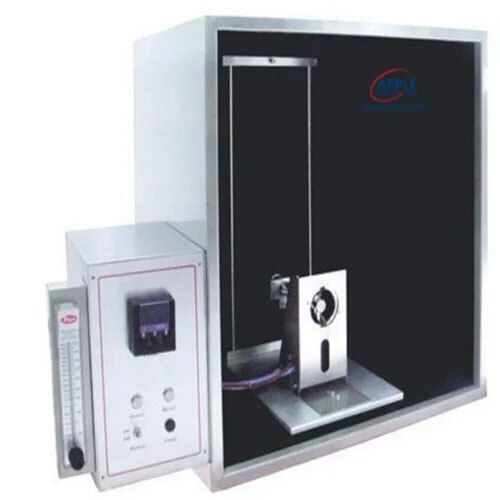
NFPA 701 1 Flammability Tester
Price 900000 INR / Unit
Minimum Order Quantity : 1 Unit
Usage : Industrial
Application : Industrial
Material : Stainless Steel
Power Source : Electric

Contact Us

- B, 314-315, Hub Town, Makarpura Bus Depot, Vadodara - 390010, Gujarat, India
- Phone : 07313726805

- Mr Vinodkumar Gaikwad (CEO)
- Mobile : 07313726805
- Send Inquiry
- A-40, Unnadeep Complex, Tower-A, Susen Tarsali Ring Road, Tarsali, Vadodara - 390010, Gujarat, India
Mr. Vinodkumar (CEO)
Mobile :+919998755997, +919558979952
 Send Inquiry
Our Products
- Fiber Testing Machine
- Fabric Recovery Testing Machine
- Strength and Fatige Testing Machine
- Color Fastness Testing Machine
- Abrasion and Pilling Testing Machine
- Flammability Testing Machine
- Universal Testing Machine
- Shrinkage Testing Machine
- Sampling Machine
- Dyeing and Finishing Machine
- Geo Textile Non Woven Testing Equipment
- Color Machining Testing Equipment
- Cotton Ginning Machine
- Yarn Testing Machine
- Oil Extraction Apparatus
- Laboratory Air Compressor
- WIRE TESTING MACHINE
- Textile Testing Equipment
- Flammability Tester
- Pull Testers
- Fibers Testing Equipment & Machine
- Texture Analyzer


APPLE ELECTRONIKS
All Rights Reserved.(Terms of Use)
Developed and Managed by Infocom Network Private Limited.
Developed and Managed by Infocom Network Private Limited.

