


 Opening Hours : Mon to Sat : 10 AM to 6 PM
 Call us :
07313726805
Call us :
07313726805

 Send Inquiry
nfpa 701 2 flammability tester
Price 900000 INR/ Unit
MOQ : 1 Unit
nfpa 701 2 flammability tester Specification
- Specimen Size
- 300 x 75 mm
- Temperature
- 15-35C
- Humidity
- 45-75% RH
- Number of Specimens
- 1 at a time
- Test Material
- Textile fabrics, industrial fabrics, and similar materials
- Test Range
- Standard method as per NFPA 701-2
- Port Size
- Standard fitting for Bunsen burner
- Gas Pressure
- 98-102 kPa
- Material
- Mild Steel
- Power
- 220V/50Hz, 100W
- Power Source
- Electric
- Dimension (L*W*H)
- 380 x 215 x 520 mm
- Weight
- 35 kg
- Usage
- Industrial
- Application
- Industrial
- Compliance Standard
- NFPA 701, Method 2
- Data Output
- Digital display, manual record
- Ignition Source
- Laboratory Bunsen burner (specified to NFPA 701-2)
- Viewing Panel
- Tempered glass for clear observation
- Specimen Holders
- Heat-resistant, stainless steel clamps
- Test Timing
- Automatic timing with digital display
- Frame Material
- Powder-coated mild steel
- Control System
- Microprocessor based
- Burner Angle
- 20° from the vertical
- Flame Height Adjustment
- 40 mm, adjustable
nfpa 701 2 flammability tester Trade Information
- Minimum Order Quantity
- 1 Unit
- Supply Ability
- 5 Units Per Month
- Delivery Time
- 10 Days
About nfpa 701 2 flammability tester
| Country of Origin | Made in India |
| Load Capacity | As Per Standard |
| Grade | Semi-Automatic |
| Material | Mild Steel |
| Brand | Apple Electroniks |
| Color | White |
| Packaging Type | Wooden Box |
| Model Name/Number | flammability Tester |
| Display Type | Digital |
| Usage/Application | Industrial |
State-of-the-Art Fire Testing Compliance
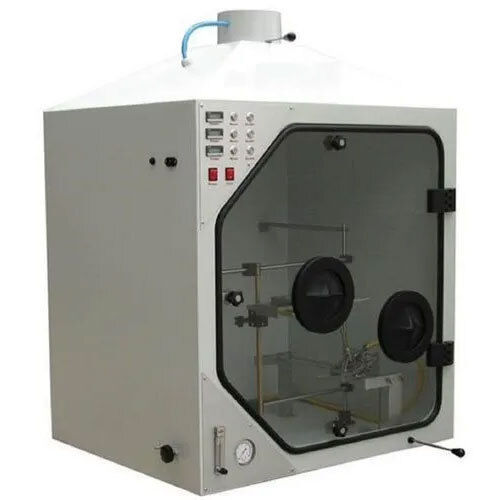
With strict adherence to NFPA 701, Method 2, this flammability tester provides highly accurate and repeatable results for industrial and textile fabrics. Built with powder-coated mild steel and heat-resistant, stainless steel clamps, it's engineered for demanding laboratory environments. The microprocessor control and digital display streamline test procedures, supporting professional and regulatory applications alike.
Enhanced Safety and Clear Observation
Safety and clarity are at the forefront of this flammability tester's design. The test chamber features a tempered glass viewing panel, allowing operators to observe tests securely and easily. Automatic timing and digital display also help reduce manual intervention while enabling precise monitoring for every test.
Versatility for Industrial Applications
Capable of accommodating specimen sizes up to 300 x 75 mm, this tester supports a diverse range of textile and industrial materials. Its adjustable flame height and gas pressure settings ensure flexibility, making it suitable for varied laboratory or production-line requirements. Integrate this instrument confidently in quality assurance processes or for compliance verification.
FAQ's of nfpa 701 2 flammability tester:
Q: How does the NFPA 701-2 Flammability Tester work?
A: This tester evaluates the flame resistance of fabric samples by exposing one specimen at a time to a 40 mm laboratory Bunsen burner flame, angled at 20 from vertical. The microprocessor-based system automatically times the exposure and displays results digitally, allowing for accurate assessment as per NFPA 701, Method 2 guidelines.Q: What materials can be tested with this instrument?
A: The device is suitable for textile fabrics, industrial fabrics, and similar sheet materials. Its specimen holders are designed to securely clamp samples up to 300 x 75 mm, ensuring wide applicability across various industries where flame retardancy testing is required.Q: When should this tester be used?
A: It is best used when you need to verify the flammability properties of fabrics, especially for compliance with NFPA 701, Method 2 standards. This is crucial for manufacturers, exporters, and suppliers who must meet strict fire safety regulations for their products.Q: Where is the NFPA 701-2 Flammability Tester typically utilized?
A: This instrument is commonly used in industrial laboratories, textile production facilities, and quality assurance departments. Its robust and compact design makes it suitable for Indian manufacturers and exporters needing an in-house solution for fire testing of material samples.Q: What is the testing process for fabrics using this instrument?
A: A fabric specimen, sized 300 x 75 mm, is clamped in the heat-resistant holder and positioned inside the chamber. The Bunsen burner flame is adjusted to 40 mm at a 20 angle. The automatic timing system initiates and records the test duration, while results are observed through the tempered glass and noted from the digital display.Q: How can the results from this tester benefit my business?
A: Reliable, standard-compliant test results help you demonstrate product safety and compliance, reduce liability risk, and facilitate market access. It also enhances quality control and can efficiently support the certification process for industrial textiles intended for use in regulated environments.Q: What are the maintenance requirements for this tester?
A: Regular maintenance includes periodic cleaning of the chamber and tempered glass panel, ensuring clamps and burners are free from residue, and checking that digital controls and microprocessor systems are functioning correctly. Maintaining consistent gas pressure (98-102 kPa) and power supply are also essential for safe and accurate operation.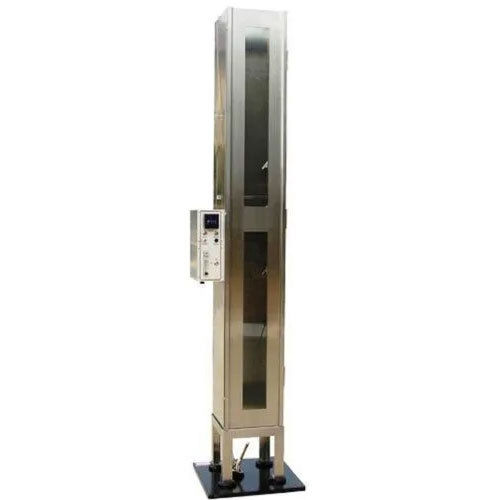
Tell us about your requirement

Price:
Quantity
Select Unit
- 50
- 100
- 200
- 250
- 500
- 1000+
Additional detail
Mobile number
Email

More Products in Flammability Tester Category
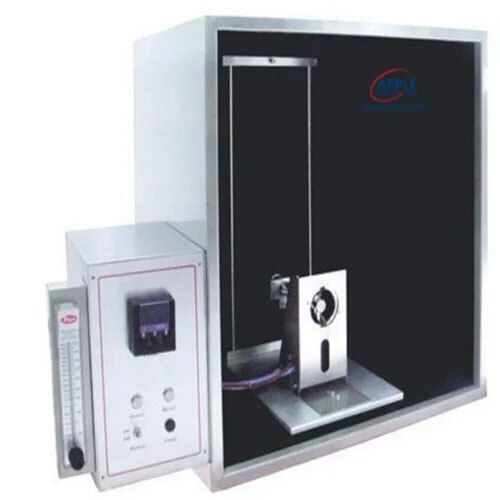
NFPA 701 1 Flammability Tester
Price 900000 INR / Unit
Minimum Order Quantity : 1 Unit
Power Source : Electric
Weight : 30 kg
Number of Specimens : As per NFPA 701 standard
Temperature : 15C 35C (controlled)
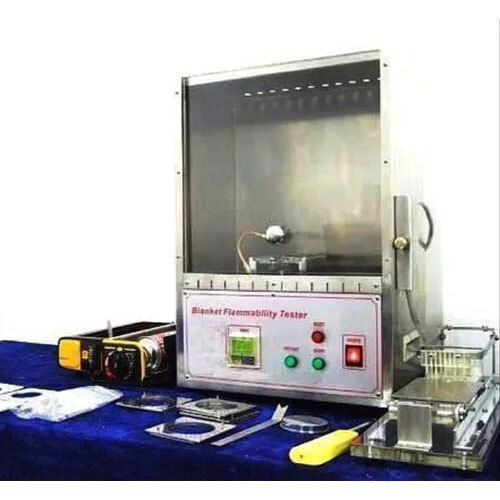
Blanket Flammability Testing Machine
Price 850000 INR / Unit
Minimum Order Quantity : 1 Unit
Power Source : Electric
Weight : Approx. 52 kg
Number of Specimens : 2
Temperature : Room temperature, adjustable
UL94 Horizontal Vertical Flammability Tester
Price 992680 INR / Unit
Minimum Order Quantity : 1 Unit
Power Source : Electric
Weight : Approx. 75 kg
Number of Specimens : 1 at a time
Temperature : Room Temp 1535C
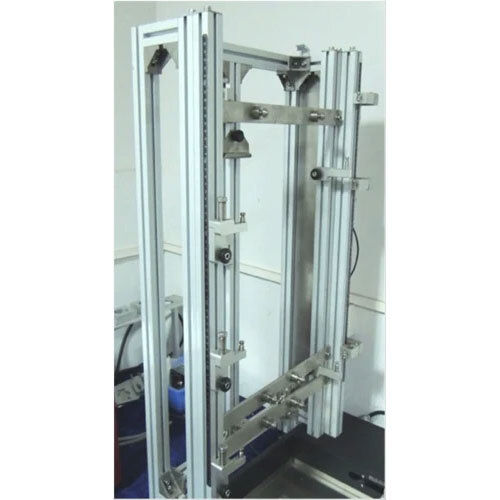
Flammability Tester
Price 792680 INR / Unit
Minimum Order Quantity : 1 Unit
Power Source : Electric
Weight : Approx. 40 kg
Number of Specimens : 1 at a time
Temperature : Up to 40C ambient

Contact Us

- B, 314-315, Hub Town, Makarpura Bus Depot, Vadodara - 390010, Gujarat, India
- Phone : 07313726805

- Mr Vinodkumar Gaikwad (CEO)
- Mobile : 07313726805
- Send Inquiry
- A-40, Unnadeep Complex, Tower-A, Susen Tarsali Ring Road, Tarsali, Vadodara - 390010, Gujarat, India
Mr. Vinodkumar (CEO)
Mobile :+919998755997, +919558979952
 Send Inquiry
Our Products
- Fiber Testing Machine
- Fabric Recovery Testing Machine
- Strength and Fatige Testing Machine
- Color Fastness Testing Machine
- Abrasion and Pilling Testing Machine
- Flammability Testing Machine
- Universal Testing Machine
- Shrinkage Testing Machine
- Sampling Machine
- Dyeing and Finishing Machine
- Geo Textile Non Woven Testing Equipment
- Color Machining Testing Equipment
- Cotton Ginning Machine
- Yarn Testing Machine
- Oil Extraction Apparatus
- Laboratory Air Compressor
- WIRE TESTING MACHINE
- Textile Testing Equipment
- Flammability Tester
- Pull Testers
- Fibers Testing Equipment & Machine
- Texture Analyzer


APPLE ELECTRONIKS
All Rights Reserved.(Terms of Use)
Developed and Managed by Infocom Network Private Limited.
Developed and Managed by Infocom Network Private Limited.

