


 Opening Hours : Mon to Sat : 10 AM to 6 PM
 Call us :
07313726805
Call us :
07313726805

 Send Inquiry
Taber Abrasion Tester
Price 6.5 INR/ Unit
Taber Abrasion Tester Specification
- Material
- SS
- Power Source
- Electric
- Dimension (L*W*H)
- 530 x 380 x 380 mm(LxWxH) Perch
- Weight
- 50 Kg Grams (g)
- Usage
- Industrial Use
Taber Abrasion Tester Trade Information
- Minimum Order Quantity
- 1 Unit
- Supply Ability
- 10 Units Per Week
- Delivery Time
- Week
- Main Domestic Market
- All India, West Bengal, Meghalaya, Madhya Pradesh, Punjab, Uttarakhand, Pondicherry, Jammu and Kashmir, Central India, Chhattisgarh, Nagaland, Maharashtra, West India, Andaman and Nicobar Islands, North India, Daman and Diu, East India, Gujarat, Karnataka, , Haryana, Bihar, Arunachal Pradesh, Himachal Pradesh, Mizoram, Rajasthan, Manipur, Kerala, Assam, South India, Andhra Pradesh, Lakshadweep, Delhi, Tripura, Odisha, Chandigarh, Telangana, Uttar Pradesh, Tamil Nadu, Sikkim, Goa, Jharkhand, Dadra and Nagar Haveli
About Taber Abrasion Tester
It specifies the testing method for laminated thermosetting decorative sheets, this Taber Abrasion Tester is a method for determining the resistance to abrasion of a dried film of varnish, paint or related product by utilizing abrasive rubber wheels and abrading by making a rotary movement. Our offered Taber Abrasion Tester has been a popular instrument for evaluating abrasion and wear resistance, easy to operate or widely recognized for test standards and covers a wide spectrum of material like laminates, leather, paper and ceramics.
Specifications:
- Grinding Wheel: Dia. 2inch
- Wear Round Centre Spacing: 53.2mm
- Gyration Speed: 60+1rpm
- Counter: LCD, 0-999,999 times
- Distance between sample to vacuum tube: 3mm
- 1 Vacuum cleaner
- Grinding Wheel CS10 from USA
- Loading Weights 6 pcs for 125cN, 250cN, 750cN
- Paster 1 Pack
- Sand Paper 10 Pcs
Models :
- TAT1/Taber Abrasion Tester (Taber Abraser) 1 Head,
- TAT2/Taber Abrasion Tester (Taber Abraser) 2 Head
- Power 220 /110 V 50/60 Hz 3 A
- Weight50 Kg
- Dimensions 530 x 380 x 380 mm(L x W x H)
| Usage/Application | abrasion |
| Material | Mild Steel |
| Power | 230v |
| Frequency | 50Hz |
| Voltage | 230v |
| Brand | Apple |
| Phase | Single |
| Color | Any |
| Display Type | Digital |
| Gear Speed | As Per Standard |
| Diameter | As Per Standard |
| Finish | As Per Standard |
| Operating Mode | As Per Standard |
| Size | As Per Standard |
| Capacity Of Storage Hopper | As Per Standard |
| Country of Origin | Made in India |
Robust Construction for Lasting Performance
Built with stainless steel, the Taber Abrasion Tester offers exceptional durability, ensuring it withstands heavy industrial use. The solid construction provides long-lasting, dependable operation, making it an essential instrument for various material testing labs and production units.
Precision Testing for Quality Assurance
Engineered for accuracy, this abrasion tester enables precise assessment of material wear resistance. Its stable 50-kg structure and electric operation facilitate consistent testing outcomes, supporting industries in maintaining product standards and compliance with quality regulations.
FAQ's of Taber Abrasion Tester:
Q: How is the Taber Abrasion Tester utilized in industrial applications?
A: The Taber Abrasion Tester is used to determine the wear resistance of materials by subjecting samples to controlled rubbing under standardized conditions. It is widely employed in industries to ensure materials meet specific durability requirements.Q: What materials can be tested with this Taber Abrasion Tester?
A: This tester is suitable for a variety of materials, including plastics, coatings, textiles, leather, and metals. Its robust design and stainless steel construction make it adaptable to diverse testing scenarios in industrial settings.Q: When should organizations use the Taber Abrasion Tester during the production process?
A: Organizations typically use the Taber Abrasion Tester during the quality control stage to assess material durability before final product approval. It can also be employed during R&D to compare the wear resistance of materials or coatings.Q: Where can this Taber Abrasion Tester be installed within a facility?
A: Thanks to its compact dimensions (530 x 380 x 380 mm), this tester can be conveniently placed in material testing laboratories or near production lines for seamless integration into existing workflows.Q: What is the process for operating the Taber Abrasion Tester?
A: To operate the tester, a sample is mounted on the turntable, abrasive wheels are applied, and the device is powered on. The sample undergoes abrasive action under controlled load, allowing wear to be measured after a set number of cycles.Q: What are the main benefits of using the Taber Abrasion Tester in industrial environments?
A: Using this tester enables accurate evaluation of material resistance, helps ensure compliance with industry standards, minimizes product failures, and supports continuous improvement in manufacturing quality.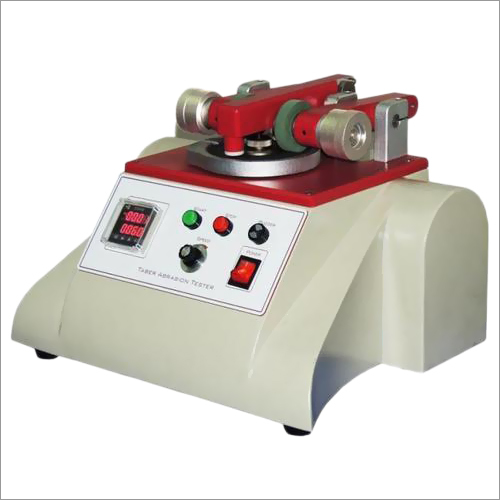

Price:
- 50
- 100
- 200
- 250
- 500
- 1000+

More Products in Abrasion and Pilling Testing Machine Category
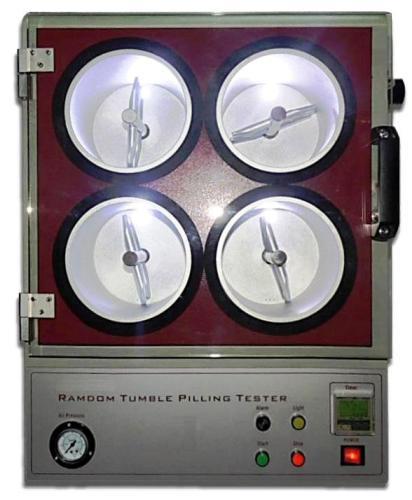
Random Tumble Pilling Tester
Price 1700000 INR / Unit
Minimum Order Quantity : 1 Unit
Power : Other, 220V AC, 50Hz
Usage : Industrial Use
Material : SS
Power Source : Electric
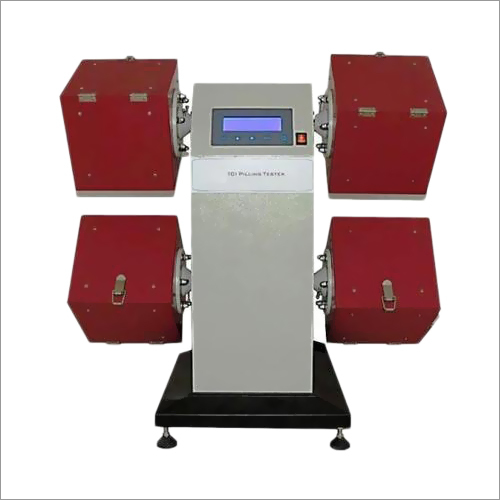
ICI Pilling & Snagging Tester & Pilling Box
Price 2000000 INR / Unit
Minimum Order Quantity : 1 Unit
Power : Other, 220 V / 110 V, 50 Hz, single phase
Usage : Industrial Use
Material : SS
Power Source : Electric
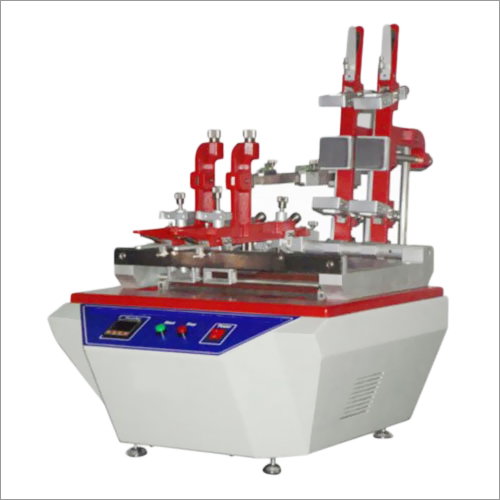
Wyzenbeek Abrasion Tester
Price 8.77 INR / Unit
Minimum Order Quantity : 1 Unit
Power : Other, 230V AC, 50Hz
Usage : Industrial Use
Material : SS
Power Source : Electric
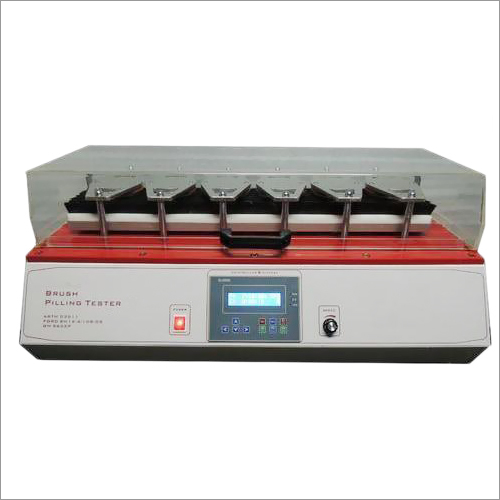
Brush & Sponge Pilling Tester
Price 1800000 INR / Unit
Minimum Order Quantity : 1 Unit
Power : 220 /110 V 50/60 Hz
Usage : Industrial Use
Material : SS
Power Source : Electric


- B, 314-315, Hub Town, Makarpura Bus Depot, Vadodara - 390010, Gujarat, India
- Phone : 07313726805

- Mr Vinodkumar Gaikwad (CEO)
- Mobile : 07313726805
- Send Inquiry
- A-40, Unnadeep Complex, Tower-A, Susen Tarsali Ring Road, Tarsali, Vadodara - 390010, Gujarat, India
Mr. Vinodkumar (CEO)
Mobile :+919998755997, +919558979952
 Send Inquiry
- Fiber Testing Machine
- Fabric Recovery Testing Machine
- Strength and Fatige Testing Machine
- Color Fastness Testing Machine
- Abrasion and Pilling Testing Machine
- Flammability Testing Machine
- Universal Testing Machine
- Shrinkage Testing Machine
- Sampling Machine
- Dyeing and Finishing Machine
- Geo Textile Non Woven Testing Equipment
- Color Machining Testing Equipment
- Cotton Ginning Machine
- Yarn Testing Machine
- Oil Extraction Apparatus
- Laboratory Air Compressor
- WIRE TESTING MACHINE
- Textile Testing Equipment
- Flammability Tester
- Pull Testers
- Fibers Testing Equipment & Machine
- Texture Analyzer


Developed and Managed by Infocom Network Private Limited.

