


 Opening Hours : Mon to Sat : 10 AM to 6 PM
 Call us :
07313726805
Call us :
07313726805

 Send Inquiry
Roller Cotton Ginning Machine
Price 5.62000 INR/ Unit
Roller Cotton Ginning Machine Specification
- Humidity
- Up to 80% RH (Operational tolerance)
- Temperature
- Up to 45C (Operational tolerance)
- Test Material
- Raw Cotton
- Type
- Automatic Roller Ginning Machine
- Material
- SS
- Power
- 7.5 HP (main drive), 0.5 HP (conveyor drive) Watt (w)
- Power Source
- Electric
- Dimension (L*W*H)
- 450 x 450 x 750 mm (LxWxH) Millimeter (mm)
- Weight
- 60 kg Kilograms (kg)
- Usage
- Industrial Use
- Application
- Separation of cotton fiber from seeds
- Lubrication System
- Centralized manual/automatic lubrication
- Spare Parts Availability
- Available
- Installation Type
- Floor Mounted
- Roller Type
- Solid MS Roller or Composite Rollers
- Feed Roller Diameter
- 160 mm
- Ginning Efficiency
- Up to 95%
- Safety Features
- Overload & Short Circuit Protection, Safety Guards
- Voltage Requirement
- 415 V, 50 Hz, 3 Phase
- Conveyor System
- Belt Conveyor for uniform feeding
- Output Capacity
- 250-300 kg lint/hour
- Ginning Technology
- Single Roller or Double Roller System
- Noise Level
- Below 80 dB
- Roller Length
- 1350 mm
- Frame Structure
- Heavy Duty Welded Construction
Roller Cotton Ginning Machine Trade Information
- Minimum Order Quantity
- 1 Unit
- Supply Ability
- 10 Units Per Week
- Delivery Time
- 5-7 Week
- Main Domestic Market
- All India
About Roller Cotton Ginning Machine
We are engaged in offering of Roller Cotton Ginning Machine which is applied for cotton research labs, or used for small production of small and medium cotton factories. This ginning machine has a rotation speed of 1400 rpm. Our provided machine is passed through a series of checks on various parameters. Clients can avail the offered Roller Cotton Ginning Machine from us in varied specifications as per the accordance to their requirements.
Specifications
- Roller size: Dia.120mm, length 205mm
- Roller rotation speed: 88 rpm
- Crankshaft rotation speed: 800 rpm
- Cotton yield: >/= Raw cotton yield (According to cotton grade)
- Rotation speed: 1400 rpm
- Pressure of roller: 4-7 kgf
- Power 220 V 50 Hz 370W
- Weight 60 kg
- Dimensions 450 x 450 x 750 mm (LxWxH)
Roller Cotton Ginning Machine Manufacturer
Roller Cotton Ginning Machine Supplier
Roller Cotton Ginning Machine Exporter
High-Efficiency Cotton Processing
Designed for modern industrial operations, this roller cotton ginning machine delivers outstanding performance with a lint output capacity of up to 300 kg per hour and a ginning efficiency nearing 95%. The use of single or double roller systems, along with options for solid MS or composite rollers, ensures adaptability and superior processing of raw cotton. Its robust construction and advanced safety features provide reliable, long-term use in demanding environments.
Built for Durability and Safety
Constructed with a heavy-duty welded frame and equipped with safety guards, overload, and short circuit protection, the machine ensures secure operation for users. Its centralized manual or automatic lubrication system and convenient spare parts availability reduce downtime and maintenance efforts, supporting consistent industrial performance. The floor-mounted installation type further guarantees operational stability during high-capacity production.
FAQ's of Roller Cotton Ginning Machine:
Q: How does the Roller Cotton Ginning Machine separate cotton fiber from seeds?
A: The machine uses single or double solid MS or composite rollers to efficiently pinch and pull raw cotton, separating fibers from seeds. The lint is extracted using these rollers while the conveyor ensures uniform feeding and continuous processing.Q: What are the power requirements and operational voltage for this cotton ginning machine?
A: The main drive requires 7.5 HP, and the conveyor drive requires 0.5 HP. It operates on a 415V, 50 Hz, 3 Phase electric power supply, making it suitable for industrial settings in India and similar power environments.Q: When should routine maintenance be performed on the ginning machine?
A: Routine maintenance should be conducted according to the manufacturer's schedule, typically daily checks for moving parts and regular lubrication via the centralized system, depending on operational hours. Timely maintenance helps sustain maximum efficiency and prevent breakdowns.Q: Where can the Roller Cotton Ginning Machine be installed?
A: This model is designed for floor-mounted installation in industrial environments such as cotton processing units, textile factories, or large-scale ginning mills. Its compact footprint allows it to fit within constrained spaces as well.Q: What process does the machine use for uniform feeding of cotton?
A: A belt conveyor system is included, which ensures that raw cotton is delivered to the rollers at a consistent rate. The uniform feeding enhances overall efficiency and contributes to superior lint quality.Q: How does the machine benefit cotton producers and suppliers?
A: With high output capacity, up to 95% ginning efficiency, and low noise operation, producers achieve better productivity, improved lint quality, and reduced operational interruptions. Its safety features and heavy-duty construction ensure safe, long-lasting, and dependable performance.Q: What is the usage and main application of this roller ginning machine?
A: The primary usage is in industrial separation of cotton fiber from seeds, processing raw cotton into market-ready lint efficiently. It is ideal for textile manufacturers, exporters, and suppliers in the cotton industry.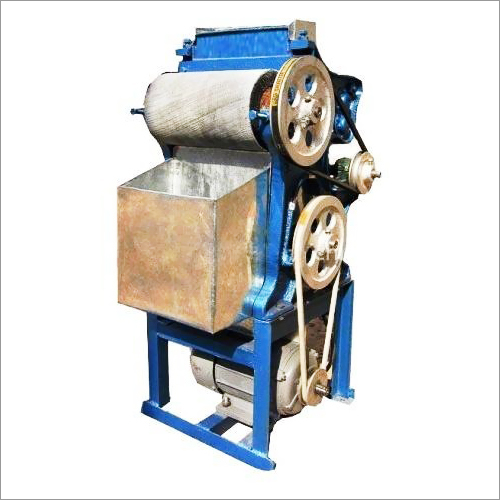

Price:
- 50
- 100
- 200
- 250
- 500
- 1000+

More Products in Cotton Ginning Machine Category
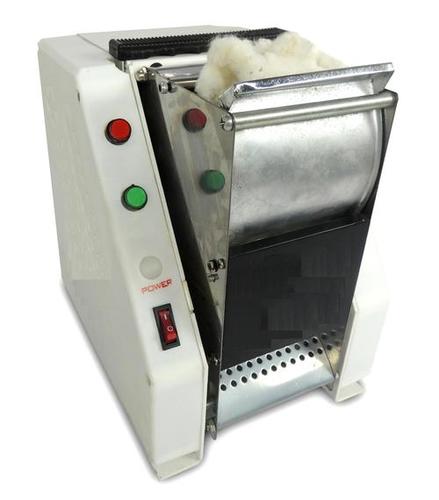
Lab Saw Cotton Gin
Price 4.5 INR / Unit
Minimum Order Quantity : 1 , , Unit
Power : 220 V / 380 V 50 Hz 2.2 kW / 4 kW
Type : Cotton Gin
Material : SS
Dimension (L*W*H) : 1400 x 800 x 1300 mm(LxWxH) Millimeter (mm)


- B, 314-315, Hub Town, Makarpura Bus Depot, Vadodara - 390010, Gujarat, India
- Phone : 07313726805

- Mr Vinodkumar Gaikwad (CEO)
- Mobile : 07313726805
- Send Inquiry
- A-40, Unnadeep Complex, Tower-A, Susen Tarsali Ring Road, Tarsali, Vadodara - 390010, Gujarat, India
Mr. Vinodkumar (CEO)
Mobile :+919998755997, +919558979952
 Send Inquiry
- Fiber Testing Machine
- Fabric Recovery Testing Machine
- Strength and Fatige Testing Machine
- Color Fastness Testing Machine
- Abrasion and Pilling Testing Machine
- Flammability Testing Machine
- Universal Testing Machine
- Shrinkage Testing Machine
- Sampling Machine
- Dyeing and Finishing Machine
- Geo Textile Non Woven Testing Equipment
- Color Machining Testing Equipment
- Cotton Ginning Machine
- Yarn Testing Machine
- Oil Extraction Apparatus
- Laboratory Air Compressor
- WIRE TESTING MACHINE
- Textile Testing Equipment
- Flammability Tester
- Pull Testers
- Fibers Testing Equipment & Machine
- Texture Analyzer


Developed and Managed by Infocom Network Private Limited.

